
A philosophy of human development.
Synthesis IVDIVO is an international philosophical and educational project. We make the Philosophy of Synthesis accessible through source texts, seminars, reflective study and creative practice.
Read the introductionExplore authors & materials →
The Human at a metagalactic scale.
How can a person develop more fully—and use that development responsibly?
What IVDIVO means
IVDIVO is the transliterated Russian abbreviation for the teaching’s name for the House or Home of the Father. Our introductory glossary renders it as the Initially Higher House of the Initially Higher Father. English source editions use different translations, so IVDIVO remains the common identifier across them.
A person is more than a profession, a social role or a set of immediate demands. We study how thought, feeling, intention and action can develop together, and how that development can serve the world we share.
Within the Philosophy of Synthesis, the Human is understood as an internally organised whole. The source books describe Parts, Systems, Apparats and Particulars, and relate this inner organisation to a wider account of existence. These terms give the study its distinctive language and require reading in context.
The Metagalaxy names the larger cosmic frame of this teaching. It extends the inquiry from the individual and the planet towards a relationship between the Human and a greater whole. The Initially Highest Father, IVDIVO and the Metagalaxy belong to this philosophical and spiritual framework. We explore their meaning through the sources, guided explanation and reflection.
Our purpose is to make sustained study possible across languages and experiences. A newcomer needs a clear beginning; an experienced participant needs reliable sources and room to deepen a question. An artist, educator or organiser may find another way to contribute through their own work.
New to Synthesis? Begin with the introduction. Use the glossary to explore the terminology and its variations across English editions, then continue with the philosophy and the study method.
The people behind the work.
Learn who authored the source materials, who curates this portal and where to find the wider teaching community.
Source author and seminar lecturer
Vitaly Serdyuk
The source tradition identifies Serdyuk as the founder of the Philosophy of Synthesis. His Paradigm books and seminar materials form central references for the programme. This portal introduces and organises access to that work, with authorship retained.
Read Paradigm: The Human →English · Word document, 1.4 MBSource introduction · RussianView profile & materials →Portal curator and multilingual edition editor
Yaromyr Farada
A monumental and decorative artist based in Dublin, Farada coordinates the development of this international portal and its educational editions. His work connects the presentation of source materials, translation, creative practice and an accessible route into study.
Contact the portal →View profile & editorial materials →
A wider history of ideas about the Human.
Theosophy, Irish literature, spiritual education, art and Cosmism offer different approaches to questions of consciousness, human development and shared responsibility.
We read these works through shared questions while attending to their different histories and conclusions. Blavatsky opens a conversation about the Human within a larger cosmos; Bailey brings inner development into relation with service; Yeats explores human experience through symbol and imagination. These connections are this portal’s editorial interpretation. The history of the Synthesis movement is presented in the next section.
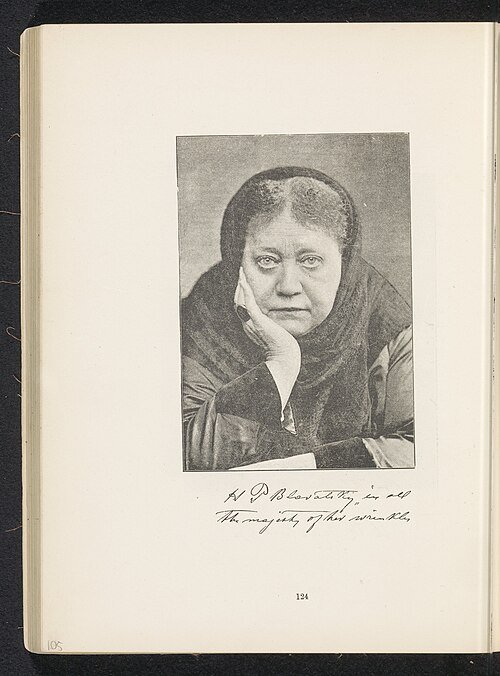
Rijksmuseum · Archive & CC0 source

Helena P. Blavatsky
How do we understand the Human within a larger cosmos?
Blavatsky co-founded the Theosophical Society in New York in 1875. Her writings, including The Secret Doctrine (1888), brought religious, philosophical and esoteric traditions into an ambitious comparative framework. They provide a historical starting point for examining the search for an underlying unity of life and knowledge. For our readers, a useful question is how a large account of the cosmos changes the way a person understands their life. Her proposals remain grounded in their nineteenth-century intellectual and spiritual context.
Biographical source [H1] ↓Alice A. Bailey
How can inner development become useful service?
Bailey developed a substantial body of twentieth-century esoteric writing concerned with spiritual development, meditation and service. Alice and Foster Bailey established the Lucis Trust in 1922; the Arcane School began in 1923. Her work places individual development within a wider consideration of group responsibility. The Seven Rays and the cosmology of her books belong to that tradition’s own interpretive framework. They offer material for comparative study alongside the question of how personal learning might become useful service.
Institutional history and books [H5] ↓W. B. Yeats
What can imagination reveal about human experience?
Irish biography and primary texts [H4] ↓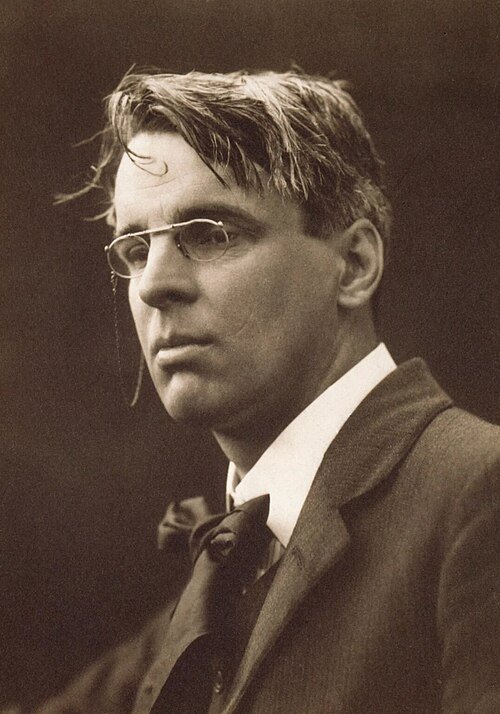
National Portrait Gallery, London.
Archive source · public domain

Yeats brought spiritual inquiry into conversation with literature, myth and artistic creation. His early interests included Dublin’s esoteric circles and contact with Blavatsky in London. He joined the Blavatsky Lodge in 1887, left the Theosophical Society in 1890 and pursued an independent path through the Golden Dawn and his writing.
In A Vision—the 1925 version and its substantial 1937 revision—he shaped a symbolic cosmology of interpenetrating gyres and twenty-eight phases. Developed with George Yeats, whose automatic-writing materials helped shape it, this imaginative system explores relationships between personality, history and spiritual life. Her contribution belongs in the account alongside his.
His wider writing pursues “Unity of Being”: a wholeness in which human faculties and experience resonate together. For this project, Yeats opens a particular connection with Ireland: the imaginative life, cultural memory and the capacity of art to explore human experience. This offers a literary and philosophical conversation with Synthesis while retaining Yeats’s own distinct framework.
Henry Steel Olcott
Turning an intellectual commitment into shared work
A co-founder and the first president of the Theosophical Society, Olcott joined organisational work with educational activity, including support for Buddhist education in Sri Lanka. His Buddhist Catechism, first published in 1881, sought to explain Buddhist teachings in an accessible form. His place in this history draws attention to the practical conditions of a learning community: institutions, communication, teaching and continuity. Ideas acquire a public life through the work people undertake together.
Biographical source [H2] ↓Annie Besant
Education, expression and responsibility
Besant joined the Theosophical Society in 1889 and served as its international president from 1907 to 1933. Her work connected writing, public speaking, spiritual interests and educational organisation. With C. W. Leadbeater she co-authored Thought-Forms, an illustrated esoteric interpretation of thought and emotion. These strands raise two questions for contemporary study: how does an inward conviction shape public responsibility, and how do images give form to an idea? The illustrations express a spiritual theory, rather than measurements of mental activity.
Biography and primary text [H3] ↓Helena Roerich
Spiritual study in the conduct of everyday life
Helena Roerich is closely associated with the writings known as Agni Yoga, or Living Ethics. These works developed from her diaries and explored spiritual development, responsibility and humanity’s relationship with the cosmos. She also translated Blavatsky’s The Secret Doctrine into Russian. Her contribution brings everyday conduct into the discussion: the quality of attention, the consequences of action and the relationship between an ideal and a lived decision. We approach this vocabulary within its spiritual and historical setting.
Archival source [H6] ↓Nicholas Roerich
Culture as a shared responsibility
Nicholas Roerich’s paintings, writing and educational projects connected artistic practice with philosophical and spiritual interests. His campaign for the protection of cultural heritage led to the Roerich Pact, signed in Washington on 15 April 1935. Alongside Helena Roerich’s work, his contribution gives this history a cultural dimension. The creation and protection of art invite us to consider how values become tangible: in an image, a building, a collection, a school or a place preserved for those who follow.
Museum biography and Pact [H7] ↓George William Russell · AE
The inner life and the life of a community
The Irish writer and artist AE shared interests in spiritual inquiry, literature and art with Yeats. He contributed to The Irish Theosophist and later worked for the Irish Agricultural Organisation Society, editing The Irish Homestead. His life brings creative work into contact with practical community commitments. In our reading, this is a valuable companion to the Yeats strand: it asks how an inner philosophy might influence cultural participation and the ordinary work of people acting together.
Archival biography [H8] ↓Cosmism
Humanity, knowledge and a planetary horizon
Cosmism brings together varied reflections on humanity’s place in the universe and responsibility for the future. The Synthesis tradition’s own introduction names Vladimir Solovyov, Nikolai Fedorov, Konstantin Tsiolkovsky, Vladimir Vernadsky and Pavel Florensky as philosophical references. Their projects have different religious, philosophical and scientific foundations. Studying them together opens questions about collective purpose, knowledge and humanity’s effects on the living world. Each contribution needs to be understood through its own methods and historical context.
Scholarly context and Synthesis source [H9] ↓The questions connecting these figures are this portal’s editorial interpretation. Dates, works and biographical details are linked to their sources below. Readers are invited to examine both the affinities and the differences.
A tradition carried through books, seminars and people.
The intellectual context above and the history of Synthesis are distinct. The movement identifies Vitaly Serdyuk as the author and founder of the Philosophy of Synthesis; its own retrospective accounts trace the development of the work to 1995.[1]
Our present portal is a new part of that longer story. Its purpose is to help readers find the teaching, understand its context and recognise whose work they are encountering.
- 1995
A point in the movement’s own account
The 2017 Congress proceedings refer retrospectively to work accumulated since 1995. This dates the tradition’s account of development; it is not the incorporation date of this website or an Irish educational institution.[1]
- 2004
2006Kyiv: recorded teaching
The official archive lists Seminar 01 associated with Vitaly Serdyuk in Kyiv on 18–19 December 2004 and 13–14 May 2006. The entries link to texts and recordings, giving the history specific places, dates and editions.[2–3]
Crimea: facilitator study
A professional seminar for facilitators is recorded in Crimea on 25–26 September 2010. It provides a dated reference point for teaching and facilitator development within the tradition.[4]
- Today
The present portal
This portal connects introductions, source texts and recorded editions, translations and educational commentary. English is its main language; each resource identifies its own language and availability.
Archive dates identify historical editions. A current event needs its own confirmed organiser, lecturer, language, timetable and participation arrangements.
Experience travels. The conversation continues.
Kyiv and Crimea form part of the documented seminar geography. For the community developing this portal, the Ukrainian experience continues through people living and working across countries: reading, translating, organising and bringing their own cultural experience to the study.
Ireland gives our present work a practical and cultural setting. Dublin is the base of portal curator Yaromyr Farada, while Yeats and AE offer a meaningful connection with Irish artistic and philosophical history. Our aim is to develop Ireland as a coordinating hub for English-language introductions and international collaboration.
The work of such a hub begins with useful materials and clear relationships. We welcome enquiries about study, translation, cultural projects and hosting. Local groups, venues and future programmes will be described through their own confirmed arrangements.
Discuss participation from your location →Several ways to take part. A clear purpose for each.
The main portal, the learning platform and the creative studio have distinct roles. Choose the route that answers your present question.
Philosophy and seminars
This site introduces the teaching, its source library and the programme of 64 seminars across four courses. Seminar pages help readers understand themes, source editions and the questions to ask before participating.
Explore the seminar programme →IVDIVO Synthesis University
The separate learning platform brings together course pages, lessons and study materials. Translated historical seminars are one kind of resource within a broader educational project. Each course page states what is available and how to access it.
Visit the University →Podcasts, art and Production
Public conversations and creative work can open a question through a story, an image or an everyday example. Synthesis Production is the separate destination for audio, visual and artistic projects. Study guides and source texts remain connected through the Library.
Explore Production → Open the source Library →GLOBAL512
GLOBAL512 presents a long-range vision for connected education, research, development and coordination. It has its own place in the project. Readers can explore that vision and distinguish its proposals from programmes and facilities already available.
Explore the GLOBAL512 vision →Depth grows through clarity and responsibility.
We approach Synthesis as a philosophical, spiritual and metaphysical tradition. Its teachings are presented in that context and distinguished from established scientific findings.
Serious study includes careful attribution, freedom to ask questions and respect for a person’s own judgement. These principles guide the development of the portal and the information we publish.
Read Participation & responsibility →- Sources and authorshipIdentify the original author or lecturer, the edition and the language. Make it possible to return to the source.
- Clear editorial rolesDistinguish a source text, a translation, an educational explanation and a personal interpretation.
- Voluntary participationLeave room to ask, disagree, decline a practice, pause or choose another direction.
- Understandable arrangementsName the organiser and lecturer, explain the format and publish the actual conditions of a programme before a commitment.
- Care for people and cultureRespect personal boundaries, consent for recordings and the authorship of creative work. Provide a route to raise a question or request a correction.
Questions a newcomer may bring.
Why are Blavatsky, Yeats and Bailey on this page?
They help explain the wider intellectual context: comparative philosophy, spiritual inquiry, symbolism, education and service. Each has a distinct history. Their inclusion expresses a field of ideas for study, not membership of, endorsement of or accreditation for the present IVDIVO project.
What does the three-decade history refer to?
It refers to the movement’s own retrospective account of the development of Synthesis from 1995. Later archive entries document specific seminars. The current website, the learning platform, any legal entity and an individual programme each have their own history and responsibilities.
Is the University a degree-awarding institution?
IVDIVO Synthesis University is presented here as an independent learning platform. This page makes no claim of state recognition, external academic accreditation or authority to award a recognised university degree. The scope of any learning certificate must be explained on the programme concerned.
Can I explore without joining a seminar?
Yes. Start with the introductory pages, read a source and bring a question. Public materials provide a way to become familiar with the language before deciding whether further study is appropriate for you.
How do I ask a question or suggest a correction?
Use the Contact page. For a source correction, include the page address, the passage and a reference that helps us examine it. For a programme, ask its named organiser about the lecturer, format, language and conditions.
A history you can follow back to its sources.
Institutional biographies, primary texts and archival records support the historical context. Sources from the Synthesis movement document its own account and its seminar archive. The connections drawn in this page are editorial interpretations.
Historical and cultural context
- H1 · H. P. Blavatsky — The Theosophical Society, AdyarInstitutional biography; founding of the Society and publication of The Secret Doctrine.
- H2 · Henry Steel Olcott — The Theosophical Society, AdyarInstitutional biography; organisational and educational work.
- H3 · Annie Besant — The Theosophical Society, AdyarBiography. Primary text: Besant and Leadbeater, Thought-Forms.
- H4 · W. B. Yeats — Dictionary of Irish BiographyRoyal Irish Academy biography, including George Yeats’s contribution. Membership chronology: David Reigle, “Theosophy and the Golden Dawn”. Primary texts: Yeats’s notes to Michael Robartes and the Dancer and The Trembling of the Veil. Editions of A Vision: official publisher’s account.
- H5 · Lucis Trust — HistoryInstitutional record of the Trust and Arcane School. Primary account: Bailey, The Unfinished Autobiography.
- H6 · Helena Roerich — International Roerich Memorial TrustArchival biographical material and the development of Living Ethics. Her translation of The Secret Doctrine is also documented in the museum biography [H7].
- H7 · Nicholas Roerich — Nicholas Roerich MuseumBiography; Roerich Pact and treaty text.
- H8 · George William Russell collection — Boston College, Burns LibraryArchival collection and biographical note for AE.
- H9 · Cosmism — Filosofia, Dickinson CollegeScholarly context; Synthesis introduction of 23 September 2015 for the tradition’s own stated philosophical references.
Synthesis: authors, history and source texts
- 1 · IVDIVO Congress proceedings, 2017Retrospective account of work since 1995, printed p. 125. The archive host may restrict direct access. Author context: source introduction.
- 2 · Kyiv, 18–19 December 2004Seminar 01; Vitaly Serdyuk; official archive entry.
- 3 · Kyiv, 13–14 May 2006Seminar 01; Vitaly Serdyuk; official archive entry.
- 4 · Crimea, 25–26 September 2010Professional Synthesis for facilitators; official archive entry.
- 5 · Introduction to the Philosophy of SynthesisThe tradition’s own description of its purpose and philosophical background, 23 September 2015.
- 6 · Paradigm, Volume 2 — The HumanEnglish source text; Word document.
- 7 · Paradigm, Volume 3 — MetagalaxyEnglish source text; Word document. Translation credited in the existing portal to Svetlana Turaeva.
- 8 · Synthesis teaching directorySource profiles for the wider teaching community; see also the Schools directory.
Editorial edition: 11 November 2026. Send a question about a source or attribution.
Choose where to begin.
Read an introduction, explore the source library or contact us about study and collaboration.
New to Synthesis?Read the introduction →Meet the people.Authors, educators & materials →Explore the sources.Browse the Library →Start a conversation.Discuss study or collaboration →